
"We should not have a repeat of what happened in Mumbai. That there was a terror attack and there was no response," Jaishankar told reporters in Mumbai.

The resolution, drafted by France and Tunisia, 'demands a general and immediate cessation of hostilities in all situations on its agenda and supports the efforts undertaken by the Secretary-General and his Special Representatives and Special Envoys'.

Sports Minister Vijay Goel on Monday made it clear that the government will not allow any bilateral cricket between India and Pakistan till the time 'cross-border terrorism' does not stop.
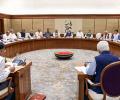
India has reached out to key global powers, including members of the UN Security Council, and apprised them about the reasons behind its military strikes on nine terror targets in Pakistan and Pakistan-occupied-Kashmir in retaliation for the Pahalgam terror attack. New Delhi also conveyed to the countries that it will retaliate if Islamabad escalates the already tense situation.

The Border Security Force (BSF) remains on high alert along the International Border (IB) and has not let its guard down, BSF Inspector General, Jammu Frontier, Shashank Anand said on Tuesday. Operation Sindoor, aimed at preventing infiltration attempts, continues as Pakistan cannot be trusted, he added. Anand highlighted the BSF's robust response after the April 22 Pahalgam terror attack, including destroying multiple terror launch pads and thwarting infiltration attempts.

In a post on X, the additional directorate general of public information posted: "Pakistan again violates the Ceasefire Agreement by firing artillery in Bhimber Gali in the Poonch-Rajouri area. Indian Army is responding appropriately in a calibrated manner."

Khan, however, evaded a question on whether Pakistan has no control over the Taliban anymore.
"International law doesn't recognise India's unilateral and illegal actions of 5 August 2019. The judicial endorsement by the Indian Supreme Court has no legal value. Kashmiris have an inalienable right to self determination in accordance with the relevant UN SC resolutions," Pakistan's caretaker Foreign Minister Jalil Abbas Jilani said in a post on X.
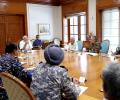
'One good outcome of Operation Sindoor -- perhaps, its best outcome -- could be that India has resumed meaningful contact directly with Pakistan at the military-to-military level,' observes Ambassador M K Bhadrakumar.

"Islamabad must end cross border terrorism, stop harbouring and training terrorists, and demolish Lashkar-e-Tayiba camps completely," Preeti Saran, Consul General of India said while addressing over 100 top executives of Canadian companies at a function on Thursday.
The United Nations Secretary-General, Antonio Guterres, has called for de-escalation between India and Pakistan, expressing deep concern over rising tensions following a terrorist attack in Jammu and Kashmir. Guterres reiterated his condemnation of the attack and urged both sides to avoid a confrontation, which he described as catastrophic. The Secretary-General has also offered his good offices to support de-escalation efforts. The President of the UN General Assembly, Philemon Yang, has also expressed concern over the escalating violence and called for a resolution through diplomatic means. Meanwhile, Pakistan has denied any involvement in the attack and reiterated its commitment to fighting terrorism.

India's position on addressing all issues including Kashmir with Pak in a bilateral framework not changed, the MEA said.
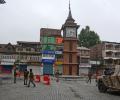
Raj Kumar Thapa, additional district development commissioner, Rajouri, and his two staff members were seriously injured when an artillery shell hit his official residence in Rajouri town, the officials said.
Terrorism and insurgency in J&K had subsided when India demolished East Pakistan -- for the simple reason that Pakistan understands power. We need to follow Chanakya's dictum of Saam, Daam, Dand, Bhed for strategising against Pakistan, asserts Lieutenant General Prakash Katoch (Retd). The ground truth is that unless we are prepared to acknowledge our shortcomings, including massive intelligence failures, punish those responsible and take corrective actions, we will continue in the same vein, asserts Lieutenant General Prakash Katoch (Retd).

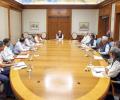
The home minister will also discuss cross border terrorism in Jammu and Kashmir and growing activities of ISIS in the country and its neighbourhood.

The Supreme Court on Monday refused to entertain a fresh public interest litigation (PIL) on the Manipur violence seeking among other things a special investigation team (SIT) probe into alleged poppy cultivation and narco-terrorism.

'We cannot endanger our national security by indulging in false bravado, fake narratives and high-decibel whitewashing. As a nation, we have to collectively fight the scourge of cross-border terrorism'
UN Secretary-General Antonio Guterres has called for maximum restraint between India and Pakistan following a deadly terror attack in Jammu and Kashmir. Guterres' spokesperson, Stephane Dujarric, said that the UN chief is following the situation "very closely and with very great concern." Dujarric also stated that any issues between the two countries "can and should be resolved peacefully, through meaningful, mutual engagement." India has downgraded diplomatic ties with Pakistan and announced a raft of measures, including expulsion of Pakistani military attaches, suspension of the Indus Water Treaty of 1960 and immediate shutting down of the Attari land-transit post in view of the cross-border links to the terror attack.

India has revoked all visas issued to Pakistani nationals effective April 27, advised Indian nationals in Pakistan to return home, and suspended visa services to Pakistani nationals. The move comes in retaliation to the Pahalgam terror attack that killed 26 people and alleged cross-border links to the attack. This escalation follows India's previous actions against Pakistan, including expelling Pakistani military attaches, suspending the Indus Water Treaty, and shutting down the Attari land-transit post.
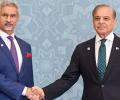
Addressing a special 'Youm-e-Tashakur' event at the Pakistan Monument in Islamabad, Shehbaz said that India and Pakistan fought three wars and got nothing.
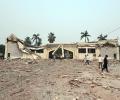
A former Pentagon official, Michael Rubin has said that India targeted terror infrastructure with precision, and it was able to blunt Pakistan's response following the recent strikes.

Trump has repeatedly claimed that he "helped settle" the tensions between India and Pakistan and that he told the nuclear-armed South Asian neighbours that America would do a "lot of trade" with them if they stopped the conflict.
The issue of cross border terrorism must be addressed to find a 'pragmatic' solution to the Kashmir issue, the opposition Bharatiya Janata Party has said as leaders from India and Pakistan favoured making the border 'irrelevant' to promote people-to-people contacts and discard the 'mistrust'.

Defence Minister Rajnath Singh on Friday praised the Indian Army as one of the most trusted and inspiring organisations in the country, highlighting its significant role in safeguarding borders, combating terrorism and assisting civil administration in times of need.
Pakistan's Deputy Prime Minister and Foreign Minister Ishaq Dar has warned India of a strong response, saying Pakistan will respond to a "brick with a stone" if India takes any action against Pakistan, amid heightened tensions following the April 22 terror attack in Jammu and Kashmir's Pahalgam. Dar alleged that India might have staged the Pahalgam attack to abolish the Indus Waters Treaty (IWT) and warned that any attempt by India to interfere with the treaty would be considered an act of war. He also said that Pakistan had no involvement in the Pahalgam incident and is getting support from countries like Saudi Arabia, China, the United Arab Emirates, the United Kingdom, Kuwait, Bahrain, and Hungary.

India is at war with terrorists and will bring justice to victims of the Pahalgam attack by holding the perpetrators accountable, Indian Ambassador to the US Vinay Kwatra has said. He underscored that India launched 'Operation Sindoor' on May 7, striking terror factories at nine locations in Pakistan and Pakistan-occupied Kashmir in retaliation for the Pahalgam terror attack that killed 26 civilians. Kwatra also criticized Pakistan for its continued support of terrorism and said that the world should be concerned about this.
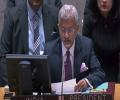
Jaishankar, who presided over the UNSC Briefing: Global Counterterrorism Approach: Challenges and Way Forward, described terrorism as an existential threat to international peace and security and said it knows no borders, nationality, or race.
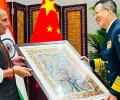
Defence Minister Rajnath Singh, in his meeting with Chinese counterpart Dong Jun in Qingdao on June 26, proposed that India and China should solve the "complex issues" under a structured roadmap comprising steps to de-escalate tensions along the frontiers and rejuvenate the existing mechanism to demarcate the borders.

The defence minister, however, said the matter is under the domain of the Union home ministry and it will take appropriate decisions.
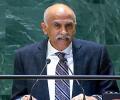
The first issue in engaging with Pakistan is the cessation of terrorism, India's envoy at the United Nations said, underlining that India has been a long-standing victim of cross-border and global terrorism and has zero tolerance towards the scourge.
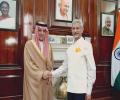
The Saudi statement came as tensions soared significantly, with Pakistan claiming that its three airbases were targeted by Indian missiles and drones early Saturday.

The Pakistani military fired unprovoked shots across the Line of Control (LoC) in Kashmir for a second consecutive night, triggering retaliatory action from Indian troops. This escalation follows heightened tension between India and Pakistan after the Pahalgam terror attack that killed 26 civilians. Despite the exchange of fire, no casualties were reported. India has imposed a series of punitive measures in response to the attack, including the suspension of the Indus Waters Treaty and closing the Attari land-border crossing. Pakistan has responded in kind, closing its airspace to Indian airlines and suspending trade with India.

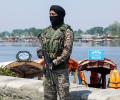
Villagers living near the International Border and Line of Control in Jammu are on high alert following the recent terror attack in Pahalgam, preparing underground bunkers and accelerating crop harvesting. The incident has heightened security concerns despite a renewed ceasefire agreement between India and Pakistan in 2021. Residents are demanding swift action against the perpetrators and their handlers.

Singham 3 will be his most politically sensitive film and he can't afford to get it wrong.

Pakistan foreign minister Bilawal Bhutto Zardari arrived in Goa on Thursday to attend a conclave of the Shanghai Cooperation Organisation (SCO), in the first such high-level visit to India from the neighbouring country since 2011.

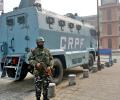
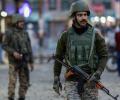
The Pakistan Army continued shelling along the Line of Control (LoC) in four sectors of Jammu and Kashmir, prompting a befitting response by the Indian Army, officials said on Thursday. The intensity of cross-border firing was less than Wednesday, when Pakistan Army carried out one of the most intense artillery and mortar shelling in years targeting the forward villages in J-K following missile strikes by India as part of 'Operation Sindoor'.
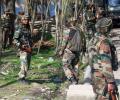
'An unconventional war cannot be fought by conventional means,' says Lieutenant General D B Shekatkar (retd).
Infiltration across the border had not declined, but there had been signs of stability in recent days thanks to stern retaliatory action by security forces along the borders, Antony said.

In his latest response to his Pakistani counterpart Aizaz Ahmad Chaudhry's fresh invitation of August 19 for talks, Foreign Secretary S Jaishankar once again emphasised on the need for earliest possible vacation of Islamabad's illegal occupation of PoK and conveyed that not just India but the larger region is aware that Pakistan is actually a "prime perpetrator" of terrorism.

The troops of these two units are expected to be based in Samba and near the Jammu-Punjab border, the sources said.
